Jacquard Cloth Material: A Complete Guide to Fabric, Uses, and Benefits
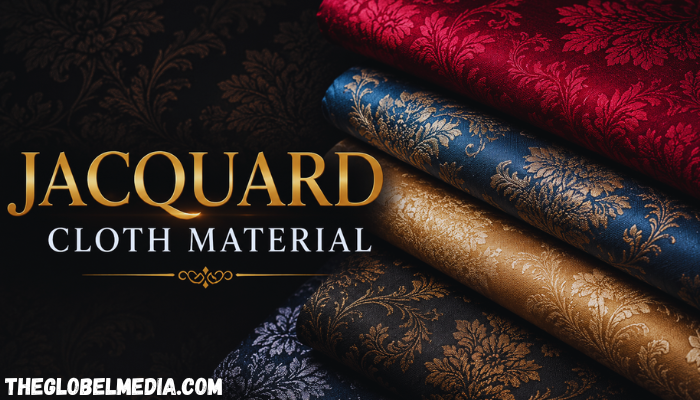
Jacquard cloth material stands out from most other fabrics because its pattern isn’t printed on top, it’s woven directly into the threads. Run your hand over a piece of jacquard and you can actually feel the design, almost like a raised texture rather than a flat image. That single detail is why jacquard has been used for everything from royal robes to modern sofas, and why it still shows up in high-end fashion and home decor today.
What Is Jacquard Fabric?
Jacquard is a woven fabric created on a specialised loom that weaves intricate patterns directly into the material instead of printing them on the surface. Unlike a printed fabric, where a plain woven cloth gets a design stamped or dyed onto its surface afterward, jacquard builds the pattern into the actual structure of the weave. This is why jacquard patterns look the same on close inspection whether you’re looking at florals, geometric shapes, or paisley designs, they’re part of the fabric, not sitting on top of it. Because the pattern is woven in, jacquard fabric tends to be thicker, more textured, and more durable than a comparable printed fabric.
A Short History of Jacquard
Jacquard fabric gets its name from Joseph-Marie Jacquard, a French weaver from Lyon who first came up with the idea for his loom in 1790, though his work was delayed by the French Revolution. He eventually demonstrated the invention in 1801, and it simplified the way complex textiles such as damask were woven. The loom used punch cards, thin cards with holes punched into them, to control which threads were raised or lowered during weaving, This innovation allowed complex patterns to be produced without relying on the skilled teamwork traditionally required for hand weaving. This invention didn’t just change textiles. Jacquard’s punch card system later inspired early computer technology by demonstrating how instructions could be stored and repeated mechanically.
Types of Jacquard Fabric
Jacquard isn’t one single fabric, it’s a weaving technique that gets applied to several different cloth types. Here are the most common ones you’ll come across.
| Jacquard Type | Texture | Common Look |
|---|---|---|
| Damask | Smooth, flat pattern with subtle sheen | Self-toned florals or motifs, often single color |
| Brocade | Raised, embossed feel | Rich, ornate multicolor designs |
| Matelassé | Puffy, quilted appearance | Bubble-like raised patterns |
| Tapestry | Heavy, dense weave | Detailed scenes or bold multicolor patterns |
| Jacquard knit | Stretchy, softer hand | Simpler repeating patterns, often on t-shirts |
Materials Used to Make Jacquard
Jacquard weaving can be done with almost any fiber, and the material chosen changes how the final fabric looks, feels, and behaves.
| Material | Feel and Look | Typical Use |
|---|---|---|
| Silk jacquard | Smooth, glossy, luxurious | Formal dresses, scarves, high-end upholstery |
| Cotton jacquard | Breathable, matte finish | Shirts, bedding, curtains |
| Polyester jacquard | Durable, wrinkle-resistant | Upholstery, outerwear, affordable fashion |
| Wool jacquard | Warm, heavier drape | Coats, blankets, winter suiting |
| Blended jacquard | Combines strengths of two fibers | Everyday clothing, mixed-use home textiles |
Common Uses of Jacquard Cloth
Jacquard shows up in more places than people usually realize. In fashion, it’s used for dresses, blazers, ties, and evening wear, since the woven texture gives garments a richer look than a flat printed fabric. In home decor, jacquard is a favorite for upholstery fabric, curtains, tablecloths, and bedding, mainly because the woven pattern holds up to years of use without fading or peeling. It also appears in accessories like handbags and neckties, where a small amount of fabric needs to carry a lot of visual detail.
Benefits of Jacquard Fabric
Jacquard has stayed popular for centuries for a few clear reasons.
It doesn’t fade the way printed patterns do. Since the design is woven in rather than sitting on the surface, the pattern stays intact even after heavy use or washing.
It has a richer, more premium feel. The raised texture gives garments and home items a look that’s harder to achieve with flat printing.
It’s generally more durable. The tighter, more complex weave structure tends to hold up better over time compared to simpler fabrics.
It opens the door to countless pattern and design possibilities. Because the loom controls individual threads, jacquard can produce anything from a subtle self-pattern to a bold, multicolor design.
Things to Consider Before Buying Jacquard
Jacquard isn’t the right choice for every project. It tends to cost more than plain woven or printed fabric because of the complexity involved in making it. It’s also usually heavier and less stretchy, so it’s not a great match for fitted activewear or anything that needs a lot of flexibility. Some jacquard fabrics, especially silk or wool versions, need more careful cleaning than a basic cotton print.
How to Care for Jacquard Fabric
Care instructions vary a lot depending on the fiber used, so it’s worth checking the label before washing anything. Silk and wool jacquard usually require dry cleaning or careful hand washing, while cotton and polyester jacquard can often be washed in a machine using a cool, gentle setting. Turning jacquard garments inside out before washing helps protect the raised pattern from friction and snagging.
Also Read: How to Choose the Best Baby Winter Clothes: Ultimate Guide
FAQs About Jacquard Cloth Material
Is jacquard fabric the same as embroidery?
No. Embroidery is stitched onto a finished fabric after it’s woven. Jacquard patterns are built into the fabric during the weaving process itself, so there’s no separate stitching involved.
Is jacquard fabric expensive?
It’s usually pricier than plain or printed fabric because the weaving process is more complex, but the exact cost depends heavily on the fiber used. Silk jacquard costs far more than polyester jacquard, for example.
Can jacquard fabric be used for everyday clothing?
Yes, especially cotton or blended jacquard, which tends to be more breathable and easier to care for than silk or wool versions.
Does jacquard fabric stretch?
Most woven jacquard has little to no stretch. Jacquard knits are the exception, since they’re made on a different type of machine that allows more flexibility.
How can I tell if a fabric is jacquard or just printed?
Check the back of the fabric. On jacquard, the pattern usually shows through on the reverse side in some form, since it’s woven into the structure. On a printed fabric, the back is typically plain or much fainter than the front.
Conclusion
Jacquard cloth material has survived more than two centuries of changing fashion because it solves a simple problem: how to build a detailed, lasting pattern directly into fabric instead of just placing it on the surface. Whether it shows up as a damask tablecloth, a brocade jacket, or a jacquard knit t-shirt, the same basic idea holds true across every version. If you want a fabric that keeps its pattern and holds up over time, jacquard is usually worth the extra cost.
Explore more exciting content on TheGlobelMedia.com