Bernhard Weißbach: The Life and Legacy of a General, Diplomat, and Kyiv Governor
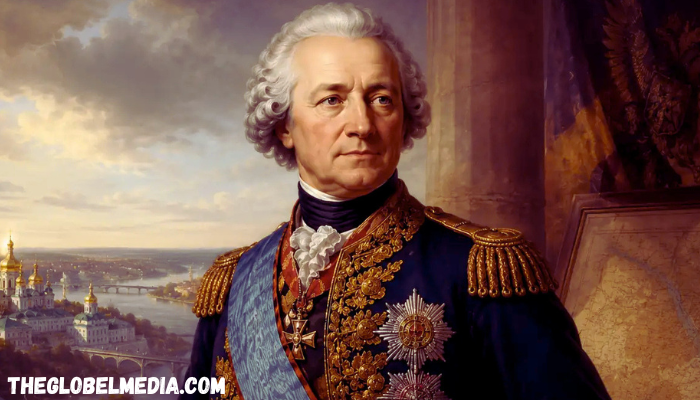
Bernhard Weißbach is the name behind Johann Bernhard von Weisbach, also spelled Weisbach or, in Russian sources, Veisbakh, an 18th-century cavalry officer who fought at Poltava, worked as a diplomat in Vienna, and later governed Kyiv for the Russian Empire. If you’ve landed on this page confused by conflicting search results, that’s normal. Some pages treat Weißbach as a plain German surname. Others tie it to Russian military history. Both are true at once, and this article sorts out which one you’re actually looking for. He isn’t a household name today, but the résumé holds up: one of the many Central European officers Peter the Great recruited to rebuild the Russian army, and unlike most of them, he kept climbing long after Peter died. Cavalry command, a count’s title, a Vienna posting, and finally the governorship of one of the empire’s most important cities.
Quick Facts: Bernhard Weißbach
| Field | Details |
|---|---|
| Full name | Johann Bernhard von Weisbach (Graf Weißbach) |
| Also written as | Weisbach, Weissbach, Veisbakh, Вейсбах |
| Born | 1665, in Bohemia |
| Died | 24 August 1735 (Julian calendar) in Poltava |
| Early service | Austrian/Habsburg army |
| Joined Russia | 1707, as lieutenant colonel of a dragoon regiment |
| Rank | General of Cavalry / General-in-Chief (from 1725) |
| Remembered for | Battle of Poltava, the Vienna mission, governing Kyiv |
| Title | Count, granted by Emperor Charles VI (1730) |
| Honor | Order of St. Alexander Nevsky (1730) |
| Governed Kyiv | 1731–1735 |
| Buried | Poltava |
Why the Spelling Keeps Changing
Weißbach is a German surname, and this particular one traveled through three languages on its way into the record books. German-language sources write it as Weißbach, or Weissbach, where the ß gets dropped. English references usually settle on Weisbach. Russian archives, where most of the surviving paperwork on him actually lives, render it as Вейсбах, which transliterates as Veisbakh. That’s also why unrelated results show up in a search. Plenty of people with the surname Weißbach have no connection to Russian imperial history at all. A rough test: if a page mentions Peter the Great, Poltava, Vienna, or Kyiv, it’s talking about the general.
Early Life: A Bohemian Officer in Habsburg Service
Weisbach was born in Bohemia in 1665, then part of Habsburg territory. Like many soldiers of his generation, he cut his teeth in the Austrian military before switching sides. National loyalty wasn’t fixed the way it is today. A capable officer could serve several rulers across one lifetime, and courts across Central Europe were often glad to have him. That’s the pattern his early years followed. Habsburg service came first. Russia came next, and it’s the move that defined everything after.
Joining Peter the Great’s Army
Weisbach entered Russian service in 1707 during the Great Northern War, arriving as a lieutenant colonel with a dragoon regiment under his command. Peter the Great was actively pulling in experienced officers from Central Europe at the time, hoping to reshape his army along Western European lines, and men who already understood cavalry tactics and siege warfare were exactly what he needed. Russia was fighting a punishing war against Sweden’s Charles XII, so this wasn’t a desk job. Peter needed commanders who could deliver results in the field, and Weisbach did enough early on to earn real trust.
The Battle of Poltava
Poltava, fought in 1709, decided the Great Northern War. Peter’s forces broke Charles XII’s Swedish army so thoroughly that Sweden never regained its footing as a major European power, while Russia emerged as the region’s dominant force. Weisbach served in the campaign as a cavalry officer. Russian and Soviet-era reference works place him at the battle consistently, though some of the finer details circulating online (which wing he led, whether he was wounded) don’t trace back to sources available in English, so they’re best read with a grain of salt rather than repeated as fact. What’s certain is that his standing rose sharply afterward. Within a decade he was handling diplomatic assignments far outside a typical officer’s job, which says something about how the court viewed him.
Vienna, Then Command in Ukraine
In 1719, the Russian court sent Weisbach to Vienna on a diplomatic assignment, an unusual move for a serving general. Vienna sat at the center of Habsburg power and European diplomacy generally, and choosing a trusted officer over a career envoy shows how far Peter’s confidence in him extended. The mission apparently went well. By 1720, Weisbach was commanding Russian forces in Little Russia, the historical term for Ukraine under imperial control. It was a demanding post: Cossack politics, pressure from the Ottomans in the south, and a frontier that never really stopped needing defense. It’s also where he’d spend the remainder of his career.
Titles, Honors, and a Fast Rise
The 1720s were good to Weisbach. On 21 May 1725, he was promoted to General-in-Chief, one of the top ranks in the Russian military. Around 1729 or 1730, he traveled to the Sejm at Grodno as Russia’s minister, another diplomatic posting that reinforced how much responsibility he’d been handed beyond the battlefield. Two honors landed close together in 1730: Emperor Charles VI made him a count, and he received the Order of St. Alexander Nevsky, among the highest distinctions Russia could offer. That same year, shortly after Empress Anna Ioannovna took the throne, he briefly led the so-called Lower Corps before moving into the post that would define the rest of his life.
Governor-General of Kyiv, 1731–1735
On 11 November 1731, Weisbach became Governor-General of Kyiv, a position he held until he died. It wasn’t a symbolic role. Kyiv mattered enormously to Russia, strategically and otherwise, and whoever ran it answered for defense, administration, and imperial authority a long way from St. Petersburg. As part of the appointment, Weisbach received large estates that had once belonged to Hetman Ivan Mazepa and members of the Cossack officer class, the starshyna. According to Ukrainian historical sources, he put them to use building out local enterprises rather than simply drawing rent from them. He’s also credited, in most accounts, as the driving force behind the Ukrainian Line, a network of fortifications built along the southern border to hold off Crimean Tatar raids. Whatever his exact hand in the engineering, the project outlasted him and remains tied to his years in office. When the War of the Polish Succession broke out in 1733, Weisbach took on command of part of the Russian forces sent into Poland, on top of everything already on his plate in Kyiv. Rank and age clearly hadn’t slowed him down.
His Final Campaign
In 1735, with a new war against the Ottomans underway, Weisbach was given orders to march roughly 25,000 troops into Crimea and answer for a string of Tatar raids on Russian territory. He never made it that far. He died while the campaign was still being prepared, on 24 August 1735 under the Julian calendar Russia used at the time (4 September by the Gregorian calendar). He was buried in Poltava, the same city where his career had first taken off decades before.
Timeline
| Year | Event |
|---|---|
| 1665 | Born in Bohemia |
| Early years | Serves in the Austrian military |
| 1707 | Joins Russian service as lieutenant colonel, given a dragoon regiment |
| 1709 | Fights at the Battle of Poltava |
| 1719 | Sent to Vienna on a diplomatic mission |
| 1720 | Takes command of Russian forces in Little Russia |
| 1725 | Promoted to General-in-Chief |
| 1729–1730 | Serves as Russian minister to the Sejm at Grodno |
| 1730 | Made a count by Charles VI; receives the Order of St. Alexander Nevsky |
| 1731 | Appointed Governor-General of Kyiv (11 November) |
| 1733 | War of the Polish Succession begins; leads troops in Poland |
| 1735 | Ordered into Crimea; dies before the campaign starts, 24 August; buried in Poltava |
Was He Famous?
Not by modern standards. No interviews survive, no widely reproduced portrait, no memoir. What we have comes from military archives, diplomatic records, and reference works compiled long after his death, mostly in Russian and German. He’s a legitimate historical figure, just a niche one, and that’s exactly why the surname causes so much confusion online. Someone researching family history lands on the page and finds an imperial cavalry general instead.
FAQs
Who was Bernhard Weißbach?
The name is most reliably tied to Johann Bernhard von Weisbach, a cavalry general and diplomat who served the Russian Empire and later governed Kyiv.
What is he best known for?
His part in the Battle of Poltava, his diplomatic posting in Vienna, and his years as Governor-General of Kyiv, from 1731 until his death in 1735.
Did he serve under Peter the Great?
Yes. He joined the Russian army in 1707, during Peter’s drive to modernize it, and stayed in service through Peter’s reign and into Empress Anna Ioannovna’s.
Where was he from?
Bohemia, born in 1665. His military career started under the Habsburgs before he moved to Russia.
Where and when did he die?
He died on 24 August 1735 in Poltava, while readying a campaign into Crimea, and is buried there.
Why does his name have so many spellings?
It passed through German, English, and Russian records over three centuries. Weißbach loses its “ß” and becomes Weissbach, gets simplified to Weisbach in English, and turns into Veisbakh (Вейсбах) in Russian transliteration. All four point to the same man.
Final Thoughts
Bernhard Weißbach, or more precisely Johann Bernhard von Weisbach, built an unusually wide-ranging career inside the Russian Empire: cavalry officer at Poltava, envoy in Vienna, army commander in Ukraine, and finally the governor who ran Kyiv. He rose steadily under Peter the Great and kept rising after Peter was gone, right up until his final year, when he was still preparing one more campaign on the same southern frontier he’d spent most of his life defending.
Explore more exciting content on TheGlobelMedia.com